















The temperature of steamed milk is one of the most critical variables in specialty coffee. Heat milk too little, and you lose structural sweetness and thermal stability; heat it too much, and you scorch the naturally occurring sugars, split the dairy proteins, and overpower the delicate notes of your espresso.
Whether you are working behind a high-volume commercial espresso bar or dialling in your morning cup at home, understanding the temperature spectrum—and calibrating your technique to achieve it—is essential.
Jump straight into our YouTube video instead.
The Three Key Temperature Ranges
1. The Cool / Specialty Zone (50°C - 55°C)
-
The Characteristics: Steaming milk to 50°C locks in exceptional silkiness and elasticity. At this lower thermal threshold, milk proteins do not split or separate, resulting in a dense, tight microfoam structure that glides effortlessly off the pitcher spout for crisp, detailed latte art.
-
Plant-Based Advantage: Alternative milks—specifically oat, soy, and almond—are prone to curdling and splitting when exposed to high heat. Keeping plant-based steaming temperatures between 50°C and 55°C prevents whey separation and maintains a creamy, cohesive texture.
-
The Trade-Off: Because it cools rapidly, a 50°C pour is primarily suited for immediate dine-in enjoyment rather than a takeaway cup that needs to survive a morning commute.
2. The Industry Standard Optimal Zone (65°C)
-
The Sweet Spot: Serving steamed milk at 65°C is the universal gold standard across specialty cafes. This temperature hits the precise threshold where lactose sugars hydrolyse into maximum perceived sweetness without scalding the milk.
-
The Balance: 65°C provides ideal thermal longevity for takeaway orders while preserving an ultra-glossy microfoam profile that pours clean latte art and highlights the complex origin notes of the underlying espresso.
3. The Extra Hot Zone (80°C to 85°C)
-
The Science: At 80°C, milk proteins denature significantly, breaking down the silky microfoam into a flat, thin liquid topped with dry froth. The natural lactose sugars break down, leaving a flat, slightly burnt flavour note that permanently alters the taste profile of the coffee.
-
Why Serve It? Customer preference always takes priority. Many drinkers—especially those used to boiling water for tea or instant coffee—prefer a drink that stays hot over an extended conversation or long drive. While baristas might resist scalding milk to protect the coffee's flavour profile, executing a customer's specific temperature request ensures a great experience every time.
How to Calibrate Your Hands with a Thermometer
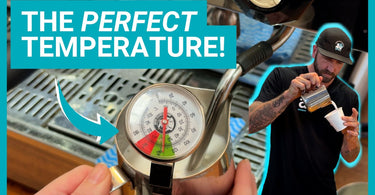
Relying purely on fingertips to gauge pitcher temperature is an unreliable method; calluses build up and wear down over time, creating an inconsistent thermal sense. To build true sensory muscle memory, use a reliable analog or digital gauge (like a Rhinoware Milk Thermometer) to calibrate your touch.
Step 1: Place the flat, meaty part of your palm against the side of the pitcher from the moment you turn on the steam wand.
                    │
                    ▼
Step 2: Monitor the temperature gauge as it climbs, noting the precise moment your palm can no longer comfortably touch the metal.
                    │
                    ▼
Step 3: Calculate the thermal lag of your machine (e.g., stopping the steam at 50°C so the needle coast-coasts up to 65°C).
                    │
                    ▼
Step 4: Count the seconds between your comfort threshold and the steam cut-off point to lock in reliable muscle memory.
The Thermal Lag Factor
On high-powered commercial espresso machines (such as a La Marzocco Linea PB), steam pressure transfers heat so rapidly that an analog thermometer dial cannot keep up in real time.
If your goal is an end-point of 65°C, you may need to shut off the steam valve early—at roughly 50°C —because the remaining residual heat inside the rolling milk will coast the reading straight up to your target temperature. Practice timing this lag using the palm calibration method, and you can reliably hit your target temperatures on any machine without relying on a gauge.
Elevate Your Cafe's Coffee Consistency
Standardizing milk temperatures across your entire team eliminates drink-to-drink variation and keeps customers returning for a reliable, exceptional experience.
Shop Commercial Milk Pitchers, Thermometers, and Accessories at Artisti.com.au
What is your preferred milk temperature when brewing at home or ordering at your local cafe—do you stick to the classic 65°C standard, or do you prefer a cooler 50°C specialty pour? Let us know in the YouTube comments section.


