













If you’ve been in the coffee industry for a while, there’s a good chance you’ve spent some time behind a classic doser lever manual coffee grinder. Long before grind-by-weight technology and sleek electronic displays took over commercial cafes, these click-clack workhorses were sitting on every espresso bar counter.
Today, we’re taking a trip down memory lane. Whether you’ve inherited an old lever grinder for your home setup, still use one in your cafe, or are just curious about coffee history, this guide covers how to dial in a manual doser grinder, maximize dose consistency, reduce waste, and know when it’s finally time to upgrade.
What is a Doser Lever Coffee Grinder?
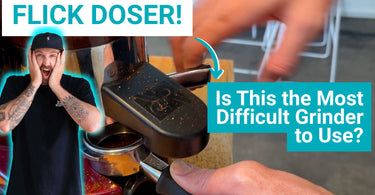
A lever grinder (or doser grinder) works by grinding coffee into a front-facing collection chamber rather than directly into your portafilter.
Inside the chamber is a mechanical carousel divided into sections. Every time you pull the lever on the side, the mechanism rotates, sweeping a pre-measured segment of ground coffee down the chute into your portafilter basket:
-
1 Flick: Single basket dose
-
2 Flicks: Double basket dose
-
3 Flicks: Triple basket dose
While the concept was designed for fast-paced commercial output, modern espresso standards demand far more precision.

The Biggest Challenges of Using a Lever Grinder
Before mastering your technique, it helps to understand the main limitations of these traditional grinders:
-
Stale Coffee & Wastage: Grinding into a chamber leaves coffee sitting out, exposed to oxygen. Pre-ground coffee oxidizes rapidly, leading to flat flavour and channelling.
-
Static & Mess: Older chute designs are prone to wild static cling, clumping, and stray grounds all over the bench.
-
Dose Inconsistency: Because doses rely on volumetric chamber space rather than mass (grams), shot times can fluctuate dramatically from one pull to the next.
4 Steps to Master Consistency on a Doser Grinder
If a manual lever grinder is what you have to work with right now, tactile muscle memory is your best friend. Follow these steps to achieve consistent espresso extractions:
1. Grind Only What You Need (Grind-to-Order)
Avoid filling the doser chamber with beans. Grind fresh for every shot to avoid stale coffee sitting in the chute. Turn the grinder off just as you reach the volume required for your basket to empty out the chamber completely.
2. Standardize Your Distribution Technique
Without modern electronic timers, your distribution technique MUST be identical every single time:
-
The Fill: Flick the lever rapidly to fill the portafilter basket evenly.
-
The Collapse: Give the portafilter one firm tap on the bench to settle the grounds (e.g., one tap every time—don't alternate between single and double taps).
-
The Chop & Swipe: Use a straight-edge finger or tool to chop the grounds into empty pockets, then swipe flat across the top of the basket.

3. Purge the Chute When Dialling In
When adjusting your grind size finer or coarser, remember that old grounds remain inside the burr chamber and chute. You must purge out the previous setting's grounds before pulling your next test shot, or your extraction times will be inaccurate.
4. Skip the Built-In Tamp
Most old-school grinders feature a built-in tamper disk on the front. Because these rarely match the exact diameter of modern portafilter baskets, stick to a standalone hand tamper or an automatic distribution/tamping tool for an even bed.

When Should You Upgrade Your Grinder?
While classic lever grinders offer a nostalgic, hands-on connection to espresso making, they require constant monitoring, high barista effort, and lead to significant coffee waste.
Signs it’s time to upgrade:
-
Burrs are worn out: Replacing burrs on an obsolete grinder often costs more than the machine's current resale value.
-
Inconsistent Grind Lock: If the collar jumps or won't hold its micrometer setting, extraction times will drift constantly.
-
Multi-Barista Inconsistency: It is difficult for a team of baristas to replicate the exact same finger-swipe volume.
Recommended Upgrades:
-
On-Demand Electronic (E-Model) Grinders: Upgrading to a grinder like the Mazzer Kony SE allows you to push a button for a timed single or double dose, keeping every shot uniform across shifts.
-
Grind-by-Weight (GbW) Grinders: The gold standard for modern cafes, delivering precise dosages by mass (grams) in seconds, virtually eliminating waste.

Final Thoughts: Love Them or Hate Them?
Manual lever grinders represent a true era of barista craftsmanship—where feel, sound, and repetition defined a great coffee maker. While modern technology has made brewing significantly easier and more precise, understanding how to control an old-school doser will make you a far better barista overall.
Are you still running an old-school grinder at home or in your cafe? Do you miss the classic click-clack sound, or are you glad to be rid of it? Let us know in the YouTube comment section!
💡 Looking to upgrade your cafe setup or step up your home espresso game? Explore our full range of professional grinders and freshly roasted specialty coffee beans at Artisti Coffee Roasters.


